There is a quiet assumption many leaders carry, both at home and at work: if something matters, we should add more to it. More effort, more time, more attention. Over time, that approach begins to work against us, not because we are doing the wrong things, but because we are doing too many of them. The impact does not stay contained to work. It becomes personal. Energy starts to drop, presence becomes harder to sustain, and even meaningful moments are not fully experienced.
This is where a shift becomes necessary. Research from Leidy Klotz, author of Subtract: The Untapped Science of Less, shows that people consistently default to adding rather than subtracting, even when removing elements would lead to better outcomes. This is not just a preference. It is a predictable blind spot. In leadership, it shows up in familiar ways. We add meetings instead of removing them, add priorities instead of narrowing focus, and add processes instead of simplifying how work gets done.
This pattern extends well beyond leadership. It shows up in how we live. Evenings and weekends begin to fill, commitments expand, and space for rest and renewal gradually disappears. Simplifying is not about doing less for the sake of it. It is about creating space for what matters most.
A different question begins to open up. Instead of asking what else needs to be added, we can start by asking:
What no longer needs to be carried?
What could be reduced, removed, or released?
What would create more space for presence, not just productivity?
A Quiet Reflection
Where in your work or life have you added out of habit rather than intention?
What might change if you removed just one thing this week?
Even small changes in this direction can have a meaningful impact. When leaders begin to subtract with intention, focus sharpens, energy stabilizes, and what remains begins to matter more. Over time, this is what sustains both performance and well-being.
Reference:
Klotz, L. (2021). Subtract: The untapped science of less. Flatiron Books.
Shared from MAY 2026 Issue of Thunderbird Leadership Consulting ELEVATE – Tbird’s Hub for Practical Leadership Insights.
In most organizations, people care deeply about the work. They believe in the mission and want to contribute in meaningful ways. And yet, over time, connection begins to change. The work becomes heavier, the pace increases, and there is less room to influence how the work gets done. Gradually, people begin to feel further from the mission that once energized them.
When connection to purpose weakens, engagement does not disappear. People still show up, do the work, and meet expectations. But it changes form, and something important is missing.
You can feel it.
Discretionary effort declines, perspective narrows, and energy becomes more transactional than intentional. At this point, many organizations focus on motivation. But often, motivation is not the primary issue. Connection is.
People reconnect to purpose when they can see themselves in the work. That happens when their perspective is invited, their input is considered, and their voice has influence. Research from Gallup shows that employees who feel their opinions count at work are significantly more engaged and more likely to contribute at a higher level. This is not about recognition alone. It is about participation in shaping outcomes.
Organizations that sustain strong engagement take a different approach. They create conditions where people can actively contribute to the mission. This goes far beyond words. It shows up in simple, intentional ways such as inviting input before direction is finalized, creating space for respectful challenge, making it visible when contributions shape direction, and reinforcing that diverse perspectives strengthen outcomes. They rebuild the connection that stimulates inspired engagement.
And over time, a different sentiment begins to emerge.
“I love it here.”
Executive Reflection
Where might your team feel disconnected from the mission, even if performance remains strong? How consistently do you invite and incorporate diverse perspectives? What signals are leaders sending about whether it is safe and valuable to speak up?
Shared from MAY 2026 Issue of Thunderbird Leadership Consulting ELEVATE – Tbird’s Hub for Practical Leadership Insights.
Click on ‘Subscribe Today’ below so you can be a part of Thunderbird’s email community and never miss our monthly ELEVATE edition!
Not every leadership challenge announces itself clearly.
In this organization, the team was strong. The work mattered. People were committed.
But day-to-day, something felt harder than it should.
Conversations took more effort. Alignment required follow-up. Teams were working, but not always together.
Nothing was broken. But it was not as smooth as it could be.
The shift did not come from a new strategy.
It came from a shared way of understanding how people work.
As one leader shared:
“Engaging with Thunderbird to introduce DiSC has moved mountains in our workplace. The conversations that are naturally happening among staff and leaders create a safe environment for self-awareness, healthy engagement, and the ability to work together as a team.”
What changed was not just communication.
It was how people interpreted each other. Understanding is the great equalizer.
Instead of guessing intent, teams had a way to understand it. Instead of reacting, they could adjust in real time. Instead of working around differences, they could work with them.
And with that clarity in communication, collaboration became more natural and less effortful.
Reflection
If you’ve provided the tools for that understanding, how deeply has the team integrated it into the leadership culture?
What are you noticing? Where might your team be working harder than necessary to stay aligned?
What could be different if people had a clearer way to understand how they and others operate?
Shared from MAY 2026 Issue of Thunderbird Leadership Consulting ELEVATE – Tbird’s Hub for Practical Leadership Insights.
Some of the biggest constraints on leadership effectiveness are the ones we no longer see.
Most leaders do not struggle because they lack intelligence, commitment, or skill. They struggle because they are still operating from beliefs that once helped them succeed but no longer serve them at their current level of leadership.
In complex environments such as healthcare, higher education, and nonprofit organizations, pressure is constant. Over time, leaders often internalize rules such as:
“I need to be involved.”
“I can’t make a mistake.”
“I need it done now.”
“I can’t say no.”
“If I don’t hold it together, others will lose confidence.”
These beliefs make sense. They are often rooted in responsibility, urgency, care, and a desire to do right by others. Earlier in a career, they may even have contributed to strong performance and advancement.
But as leadership scope grows, the beliefs that once created success can begin to create strain. What once looked like dedication can become overinvolvement. What once looked like high standards can become overcontrol. What once looked like steadiness can become isolation.
That is why leadership growth at this level is often less about adding new skills and more about examining the internal assumptions driving your behavior under pressure.
A few questions to consider:
Which of these beliefs shows up most for you when the stakes feel high?
Where might it be limiting your effectiveness or your team’s growth?
What is it costing you, your team, or the work right now?
Choose a Different Move
If you feel you need to be involved, you may become the bottleneck. Try this: Delegate one decision fully and step back. You might say, “I trust your judgment on this. Please move it forward, and let me know if you run into a major obstacle.” Sometimes the growth opportunity is not for your team, but for you.
If you feel you cannot make a mistake, you may overcontrol decisions. Try this: Invite challenge before declaring direction. For example, “Before we finalize this, what am I missing?” or “What concerns do we need to surface now?” That simple move often creates better thinking and signals that honest input is welcome.
If you feel it must be done now, your team may begin to operate in urgency rather than clarity. Try this: Slow one decision down and create a little space. You might say, “Let’s take 24 hours and come back with the risks, tradeoffs, and implications.” Not every important decision needs speed. Many need thought.
If you feel you cannot say no, your focus may become diluted. Try this: Decline one request that does not align with current priorities. For example, “This matters, but I can’t give it the attention it deserves right now,” or “I’m not the right person to lead this.” A well-placed no protects what matters most.
If you feel you must hold it together, you may become isolated. Try this: Share one appropriate uncertainty. You might say, “I do not have the full answer yet, but here is what I know and how I’m thinking about it.” Leaders do not build trust by projecting perfection. They build it by being steady, honest, and clear.
Then pay attention.
After you experiment with a different move, notice what changes. What happens in you? What do others seem to notice? What shifts in the team’s response, energy, or ownership?
Leadership growth is not always about doing more. Often, it is about loosening the grip of an old belief so you can lead with more intention, more range, and more trust in others.
Sometimes the next level of leadership does not require a new tool. It requires letting go of an old rule.
Further Reading
Muriel M. Wilkins, The Hidden Beliefs That Hold Leaders Back, Harvard Business Review, Nov–Dec 2025
Brené Brown, Dare to Lead, Penguin Random House, 2018
Jennifer Garvey Berger, Unlocking Leadership Mindtraps, Stanford Briefs, 2019
Author: Mary Lockhart, PhD, MS ~ Facilitator and Executive Coach
Shared from MAY 2026 Issue of Thunderbird Leadership Consulting ELEVATE – Tbird’s Hub for Practical Leadership Insights.
Click on ‘Subscribe Today’ below so you can be a part of Thunderbird’s email community and never miss our monthly ELEVATE edition!
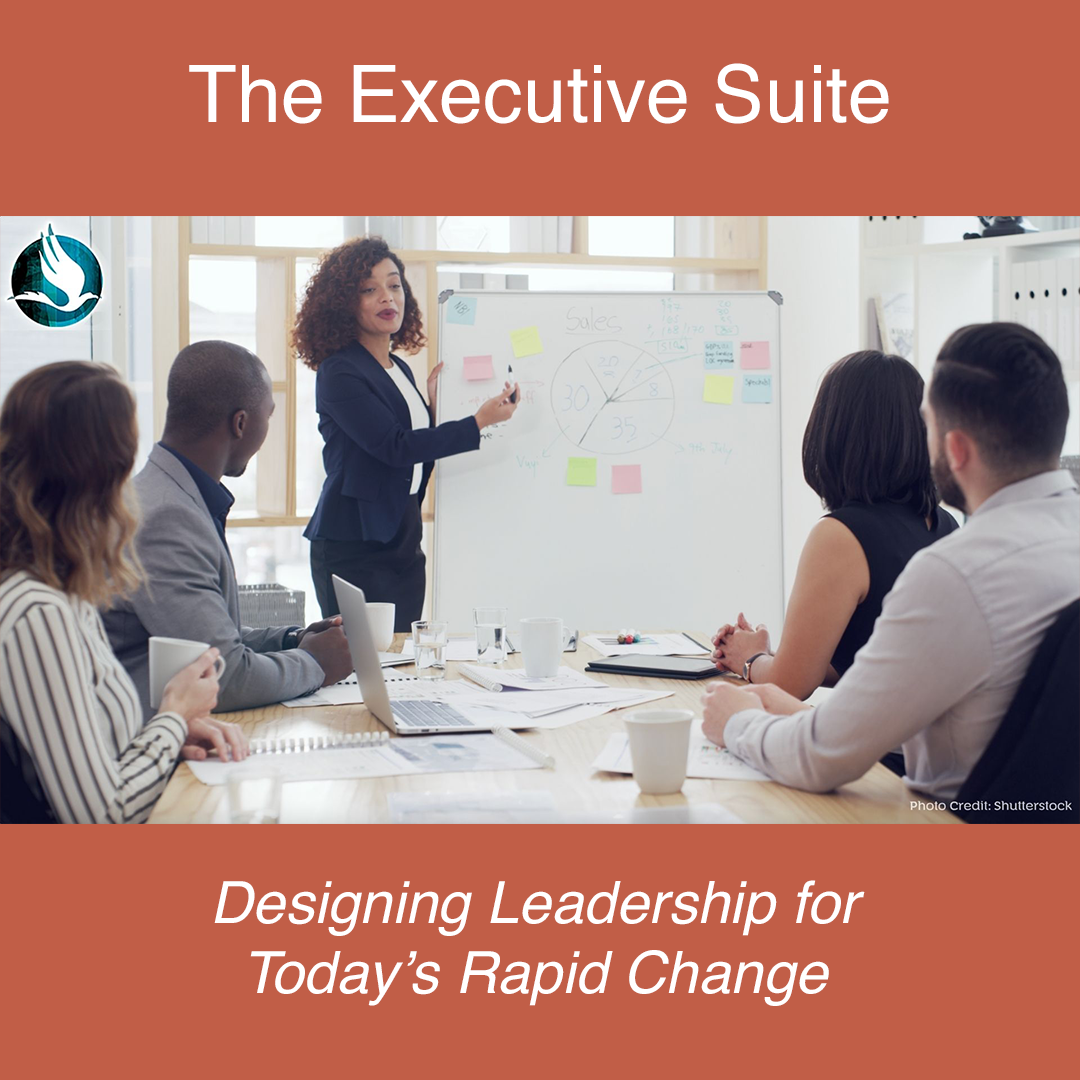
Leadership systems are often designed for stability. These structures work well when conditions are steady and resources are sufficient. Today, most complex organizations are operating in a different reality. They are navigating persistent constraints, including limited resources, competing priorities, and accelerating change.
Under that level of pressure, even strong systems can begin to feel strained. The challenge is not a lack of leadership capability, but a misalignment between how leadership is structured and the current conditions leaders are navigating. Optimization alone is no longer sufficient. Today, there is a pronounced need for more intentional design.
In environments defined by constraint and rapid change, three opportunities consistently emerge.
1. From Broad Involvement to Intentional Focus
When pressure increases, executive teams often move closer to the work. They hold decisions more tightly and step in more frequently. The intent is strong, but the impact can be mixed. Over time, this concentrates pressure at the top and slows execution.
High-performing teams take a more deliberate approach. They clarify where executive attention is essential, and where it is not. They reset priorities and define what truly requires their involvement. Focus becomes a design choice rather than a reaction to urgency.
2. From Activity to Decision Clarity
Constraint makes decision friction more visible. It often shows up as unclear ownership, layered approvals, and routine escalation to executives instead of confident ownership. In fast-moving environments, these patterns slow momentum and create unnecessary strain.
High-performing organizations address this directly. They establish clear decision rights, define escalation thresholds, and create a shared understanding of what “good enough” looks like in practice. This does not reduce rigor or diminish excellence. It enables timely, confident decisions because expectations are clear.
3. From Individual Capacity to System Capacity
Many organizations continue to view capacity through an individual lens, identifying who can take on more work or step in. Over time, this places sustained pressure on a small group of leaders.
High-performing organizations shift the focus to the system. They ask how leadership is distributed and then design for shared ownership, reduced dependency on a few individuals, and clear expectations that support autonomy. The result is leadership that is more evenly activated and more sustainable over time.
The Critical Reframe
Constraint creates an opportunity for clarity. It reveals how leadership is currently designed.
Organizations that rely primarily on individual effort may begin to feel increasing strain and experience diminishing returns despite greater effort. Those that realign their leadership systems often find that capacity expands, even when resources do not.
Executive Team Reflection
Set aside time with your leadership team to explore these questions together. Compare perspectives, identify where patterns are showing up across the system, and align on one shift that would create greater clarity, capacity, or focus.
Where is executive involvement adding value, and where might it be adding pressure?
Where could decision clarity reduce friction and improve momentum?
Where is the system relying on a few leaders instead of activating many?
Author: Rhonda Williams
Shared from MAY 2026 Issue of Thunderbird Leadership Consulting ELEVATE – Tbird’s Hub for Practical Leadership Insights.
Leadership often carries a quiet weight. Not because leaders are unwilling to share responsibility, but because they care deeply about outcomes, people, and mission. With that, care can come in the form of a subtle inner voice: If I don’t step in, this may not go well.
For many leaders, that voice feels protective. It has likely served you well. It has helped you anticipate risk, prevent mistakes, and move initiatives forward. Letting go can feel uncomfortable, even risky.
Yet it is worth asking: what would it feel like to loosen your grip, even slightly?
At work, the instinct to intervene can show up in subtle but powerful ways: jumping in to respond when others are fully capable, controlling the flow of information to ensure accuracy, requiring multiple layers of approval before action can move forward, and protecting team members from natural consequences that might support their growth.
At home, it may appear as over-managing schedules, solving problems before others have a chance to try, never saying no, or taking on more than what fully belongs to you.
These behaviors are rarely rooted in ego. More often, they stem from responsibility, experience, and a desire to prevent harm. As one client shared, “I shift into Mama Bear mode.” Yet over time, consistent intervention can narrow ownership, slow development, and unintentionally signal limited trust. What used to feel like support begins to limit growth.
There is honor in ownership. Effective leadership requires accountability, visibility, and care. But when ownership becomes overextension, it can quietly restrict others’ space to stretch. This is the often-discussed gap between intention and impact, where care is present, but space for others begins to narrow.
Letting go does not mean disengaging. It does not mean caring less. It is a choice to trust more and create room for learning, imperfection, and shared responsibility to take hold.
Food for thought: Consider the members of your team. Where might holding tightly be protecting you more than serving those around you? And where might a small act of trust strengthen both your leadership and theirs?
Together, we rise.
Shared from APRIL 2026 Issue of Thunderbird Leadership Consulting ELEVATE – Tbird’s Hub for Practical Leadership Insights.
Click on ‘Subscribe Today’ below so you can be a part of Thunderbird’s email community and never miss our monthly ELEVATE edition!
High-impact mentoring relationships do not happen by accident. They are intentionally designed, actively managed, and grounded in mutual accountability. In organizations focused on building strong leadership pipelines, the effectiveness of mentoring often depends less on the mentor and more on how the mentee engages with the relationship.
High-impact mentees accelerate learning, respect executive time, and translate insight into better leadership decisions. They treat mentoring not as a courtesy meeting, but as a strategic partnership.
A mentor brings pattern recognition, institutional wisdom, and perspective shaped by experience. Unlike a coach—who primarily serves as a thinking partner—a mentor draws from lived experience to help mentees anticipate challenges, avoid common pitfalls, and strengthen judgment.
Because mentors invest their time and experience generously, mentees carry a responsibility to show up prepared, focused, and accountable. Becoming an effective mentee means owning the relationship and maximizing the return on that investment.
When approached intentionally, mentoring accelerates leadership readiness, strengthens judgment, and expands organizational capacity.
The following practices distinguish highly effective mentees.
1. Enter the Relationship with Clarity
Strong mentoring relationships begin with clear expectations and operating norms.
Determine the cadence. Agree on a meeting rhythm—monthly, bi-weekly, or quarterly—that reflects the goals of the relationship and the realities of both schedules.
Select the medium. Decide how you will meet (e.g., Zoom, phone, or in person), recognizing that flexibility and consistency matter more than format.
Take initiative. As the mentee, own the logistics. Schedule meetings, send calendar invitations, and confirm agendas. This signals professionalism and respect for time.
2. Take Ownership of the Learning Agenda
Clarity of purpose enables sharper conversations and better outcomes.
Define your objectives. Be explicit about what you want to work on. Effective goals are specific and decision-oriented—for example, strengthening executive presence, navigating a role transition, or preparing for broader leadership scope.
Establish communication boundaries. Discuss expectations for communication between meetings. Clarify when quick questions are appropriate and when topics should wait for scheduled conversations.
Track progress deliberately. Maintain a simple, shared or personal record of goals, insights, decisions, and action steps. Treat this as a living document that keeps the work focused and accountable.
3. Translate Insight into Action
Mentoring creates value only when insight leads to execution.
Arrive prepared. Send a short agenda or set of questions 24 hours in advance. This allows your mentor to prepare thoughtful, relevant input.
Close the loop. Begin each session by summarizing progress since the last conversation. Share what you did, what worked, and what did not.
Commit to next actions. End every meeting by identifying one or two specific actions.
Calendar them immediately. Insight is nice, but without action, you lose momentum.
Surface obstacles early. Strong mentees use mentoring conversations to diagnose barriers.
4. Build a High-Trust, High-Value Relationship
The most productive mentoring relationships are grounded in respect, appreciation, and reciprocity.
Share outcomes and wins. When guidance leads to results such as a successful presentation, a clearer decision, or a new opportunity, remember to close the loop. Mentors value knowing their investment made a difference.
Contribute where appropriate. While mentoring is not transactional, all-star mentees bring value when they can—sharing relevant articles, industry insights, or emerging trends.
Demonstrate respect consistently. Be punctual. Come prepared. Follow through. Express appreciation. These behaviors reinforce trust and credibility over time.
Mentors invest their experience to help others grow into greater leadership responsibility. When mentees approach the relationship with discipline, initiative, and accountability, mentoring becomes a force multiplier for the individual, the mentor, and the organization by accelerating leadership capabilities where they matter most.
For leaders who mentor, the greatest return on your investment comes from mentees who treat mentoring as a strategic partnership rather than a standing meeting.
Reflection
Where might you shift from participating in mentoring to actively owning the value you receive from it?
Shared from APRIL 2026 Issue of Thunderbird Leadership Consulting ELEVATE – Tbird’s Hub for Practical Leadership Insights.
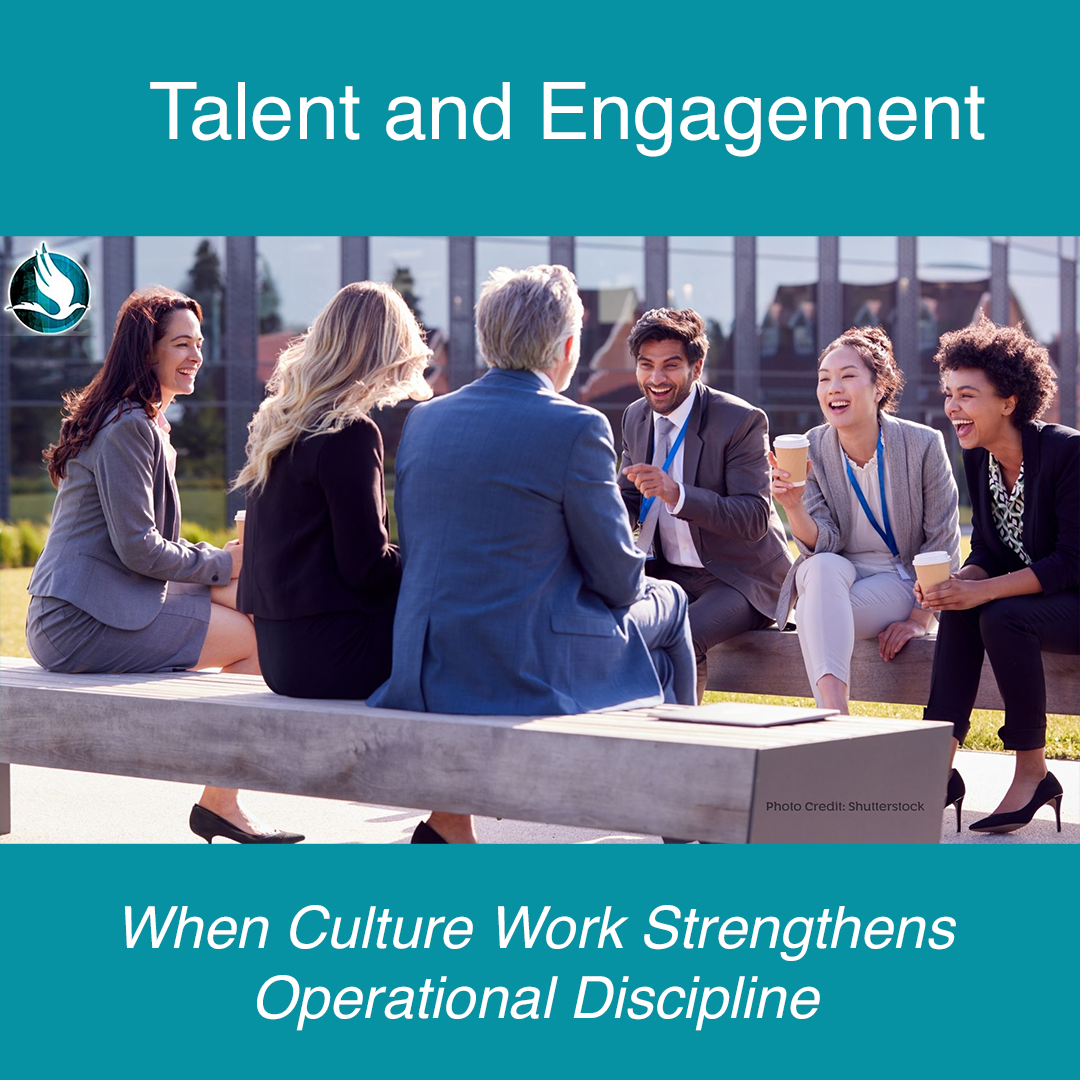
In reviewing recent client feedback, one theme surfaced consistently: our impact extends beyond shaping culture. It strengthens operational discipline.
That insight emerged alongside this reflection from a client: “Our engagement led to measurable improvements in team performance, communication, collaboration, and workflow.”
At first glance, culture and operations can feel like separate conversations. Culture is often associated with trust, values, and behavior. Operations are associated with structure, execution, and workflow. In practice, they are inseparable.
Culture work is operational work.
When leaders clarify expectations, define decision rights, strengthen accountability, and establish consistent communication rhythms, they are not only reinforcing culture. They are improving how work moves. Teams experience less friction. Priorities become clearer. Collaboration becomes more coordinated. Performance becomes more consistent.
This is where the familiar question emerges: does culture drive operational discipline, or does operational discipline reinforce culture?
The answer is both. The sequence matters less than the alignment.
Values without structure create inconsistency. Structure without shared values creates rigidity. When leadership methodology aligns expectations, behaviors, and systems, operational discipline becomes a natural byproduct of cultural clarity. It reduces the friction that slows execution and limits innovation.
What often appears as a culture issue is frequently a signal of operational misalignment.
What It Looks Like in Practice
Leaders often label challenges as cultural issues when the root cause is operational. Consider the shift:
Is it a lack of focus or unclear priorities?
Is it delayed execution, or unclear ownership?
Is it poor communication, or inconsistent communication rhythms?
Is it low accountability, or undefined expectations?
Is it resistance to change, or lack of clarity on what success looks like?
When these underlying elements are clarified, behaviors often shift quickly. What once felt like a cultural challenge is beginning to resolve through operational alignment.
The question shifts from “What is wrong with our culture?” to “Where is our system creating confusion?”
What Leaders Can Do Now
Identify one recurring workflow that feels inefficient and clarify ownership, expectations, and decision rights.
Examine whether current meeting rhythms reinforce clarity or introduce unnecessary noise.
Select one operational process and intentionally align it with a stated cultural value. Observe what changes.
The true measure of culture is how consistently systems reflect stated values. When alignment is present, trust strengthens, execution improves, and teams experience greater clarity in how work gets done.
Shared from APRIL 2026 Issue of Thunderbird Leadership Consulting ELEVATE – Tbird’s Hub for Practical Leadership Insights.
Click on ‘Subscribe Today’ below so you can be a part of Thunderbird’s email community and never miss our monthly ELEVATE edition!
Across our client engagements, one theme has surfaced consistently. Leaders are not just gaining insight into others. They are gaining clarity about themselves.
This shift is not abstract. It is practical.
This matters more than many leaders realize. Research suggests that while 95% of people believe they are self-aware, only 10 to 15% truly are (Eurich, 2018). This is not a reflection of intent. It reflects how difficult it is to see the full picture when you are in the frame.
Recently, leaders shared how impactful the introduction and integration of DiSC has been across both executive and leadership teams.
Leaders shared:
“I thought I understood my communication style. I did not realize how it was impacting others.”
“Team collaboration and using DiSC to dial into the impact of our styles and how it affects communication and team results. We are using tools to guide differences and team projects.”
“The most significant changes for our teams and executive staff were the development of shared understanding of one another’s communication styles through DiSC and awareness of the consequences of our actions and words.”
Self-awareness is often discussed as a foundational leadership skill. In practice, it is a performance lever.
When leaders understand their natural styles, how they show up under pressure, how they communicate, and how they are experienced by others, several things begin to shift.
Conversations become more intentional. Reactions become more measured. Decisions become more thoughtful.
Understanding our natural styles is step one. The real value of a tool like DiSC emerges when it is integrated into day-to-day work, where leaders begin to recognize patterns in themselves and others:
These patterns often become most visible:
When urgency increases
When navigating tension
When decisions are uncertain
This awareness creates choice.
Instead of reacting automatically, leaders can adjust in real time to better align with the needs of the moment and the people around them.
This is where self-awareness moves from insight to impact.
What Leaders Can Do Now
Identify one communication pattern that may be helpful in some situations but limiting in others
Ask for feedback from a trusted colleague on how your style is experienced
Pause in one high-stakes interaction this week and intentionally adjust your approach by dialing up or dialing down your style
Self-awareness is not about changing who you are. It is about expanding how effectively you lead others.
Leaders who understand themselves lead others with greater care and precision.
Reference:
Eurich, T. (2018). What self-awareness really is (and how to cultivate it). Harvard Business Review.
Shared from APRIL 2026 Issue of Thunderbird Leadership Consulting ELEVATE – Tbird’s Hub for Practical Leadership Insights.
Healthcare workforce discussions are often framed around staffing shortages. Yet a deeper constraint is emerging. The system is not only experiencing a shortage of clinicians. It is experiencing a shortage of prepared leaders.
As highlighted in recent workforce analysis, the most critical challenge facing healthcare organizations is not only a shortage of clinicians, but a growing shortage of experienced leaders capable of navigating increasing complexity (Cross Country Healthcare, 2026). At the same time, more than 80% of healthcare executives expect workforce challenges to persist, reinforcing that this is not a short-term disruption but a sustained pressure on the system (Deloitte, 2025).
This creates a critical shift in how organizations think about capacity. The question is no longer only “Do we have enough people?” but “Do we have enough leaders equipped to lead effectively?”
Why This Is Emerging Now
Recent workforce analysis highlights that leadership gaps in healthcare are being driven by several converging forces (Cross Country Healthcare, 2026).
Retirements are accelerating at the same time burnout continues to impact experienced leaders. Many clinical and operational leaders are stepping away from roles that now carry increasing complexity across financial, operational, and people demands.
At the same time, traditional leadership pipelines are shifting. Fewer clinicians are pursuing long-term leadership roles without sufficient flexibility and support, creating a gap between leadership demand and readiness.
Layer onto this the pace of change. Evolving care models, workforce redesign, and increasing operational complexity require leaders who can navigate transformation rather than just maintain existing systems.
In response, many organizations are turning to interim leadership to maintain stability and momentum.
An Emerging Pattern
As highlighted in recent workforce analysis, leadership gaps are already influencing access, engagement, and operational performance across healthcare organizations. In practice, this often shows up as variability across teams, even when staffing levels are comparable.
Persistent patterns are emerging. Some teams operate with clarity, coordination, and steady performance. Others experience communication breakdowns, delayed decisions, and uneven accountability.
While staffing is a factor, these patterns often point to opportunities to strengthen leadership capacity.
This is where interim leaders can play a pivotal role. These leaders provide critical short-term stability and allow organizations to maintain continuity during transitions. However, their effectiveness depends heavily on how they are integrated into the system.
Without clear expectations, defined priorities, and structured support, interim leaders can quickly become overextended. In many cases, leaders stepping into interim roles are also expected to maintain their existing responsibilities. This creates competing demands that dilute focus and impact.
Impact
Increased variability in performance across teams despite similar staffing levels
Slower decision-making due to unclear ownership and competing priorities
Leadership fatigue and reduced effectiveness in interim and dual-role positions
Missed opportunities to build systems that support sustainable leadership pipelines
Assessing the Need and the Opportunity
Healthcare organizations do not just need more people. They need more prepared leaders, supported by systems that enable them to succeed.
This is particularly important when leaders are asked to step into interim roles or expanded responsibilities. Without intentional design, these situations can unintentionally create strain rather than stability.
Organizations can strengthen leadership capacity through:
Selection: Identifying leaders for their ability to lead people and manage complexity, not only to execute tasks Integration: Establishing clear expectations, priorities, and support systems for leaders stepping into new or interim roles Clarity: Defining what success looks like, including decision rights, scope, and what can be deprioritized
A critical leadership question becomes: What must this leader focus on to be successful, and what must be released or reassigned to make that possible?
Learning Into Action
Rethinking Gaps
Leadership gaps often appear as operational friction. Variability in execution, delayed decisions, and communication breakdowns are frequently signals of constrained leadership capacity, not just staffing shortages.
Assess
Where are you experiencing inconsistent performance across teams?
How clear are expectations for leaders stepping into interim or expanded roles?
What support systems are in place for leaders during their first six months in a new or expanded position?
Do
Identify one leadership role where capacity constraints are most visible
Clarify top priorities and explicitly define what can be deprioritized or reassigned
Introduce one structured support mechanism, such as onboarding, coaching, or mentoring, for leaders in transition, including experienced leaders
Why These Insights Matter
Healthcare organizations are operating in environments where financial, workforce, and operational pressures are unlikely to ease in the near term. Strengthening leadership capacity is one of the most leveraged ways to improve performance without increasing headcount.
Organizations that intentionally design how leaders are selected, integrated, and supported position themselves to navigate complexity with greater consistency, coordination, and confidence.
References
Cross Country Healthcare. (2026). Healthcare workforce shortages in 2026: Why leadership gaps are creating new career opportunities.Deloitte. (2025). Global Health Care Executive Outlook.
Deloitte. (2025). Global Health Care Executive Outlook.
Shared from APRIL 2026 Issue of Thunderbird Leadership Consulting ELEVATE – Tbird’s Hub for Practical Leadership Insights.
Click on ‘Subscribe Today’ below so you can be a part of Thunderbird’s email community and never miss our monthly ELEVATE edition!