
When Culture Work Strengthens Operational Discipline

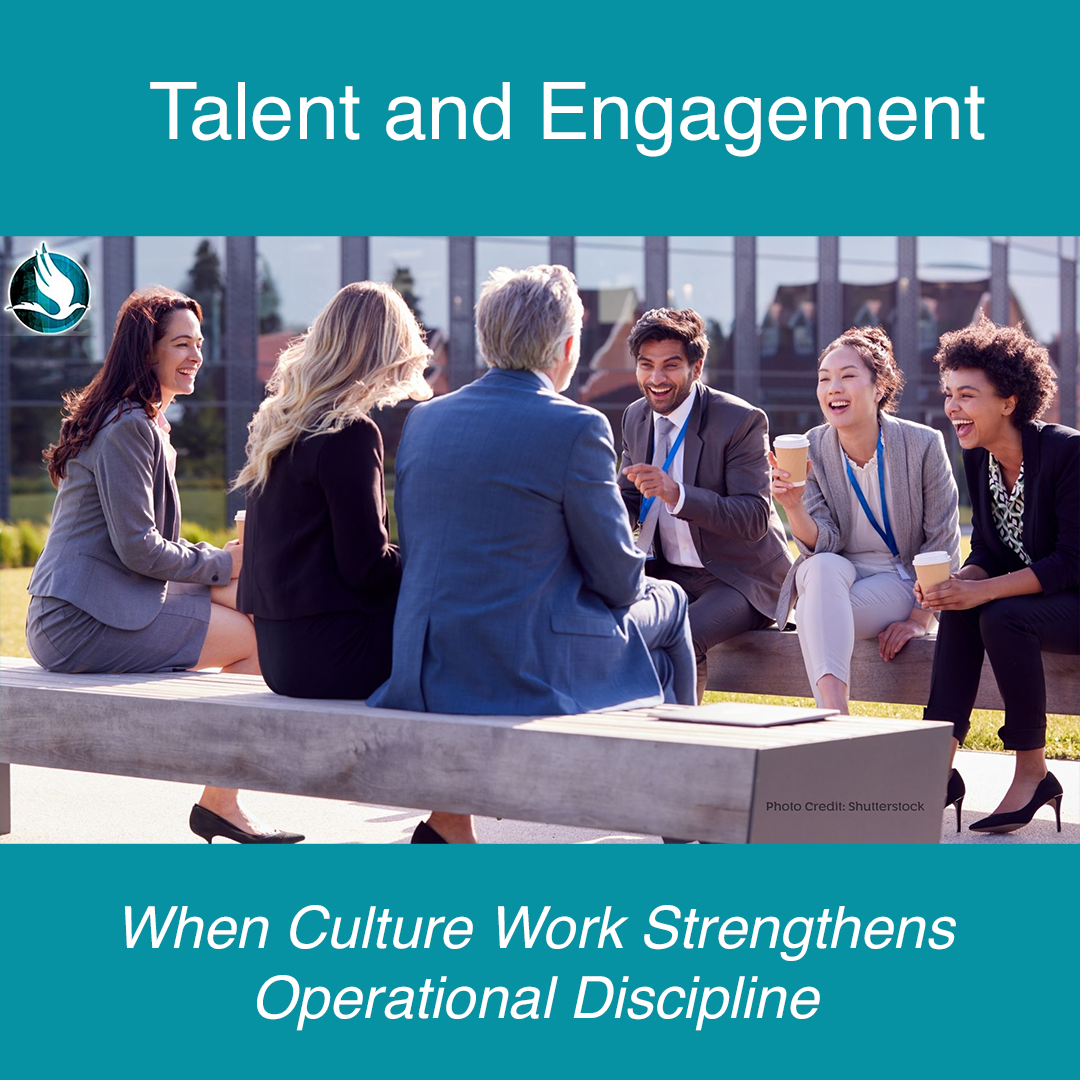
In reviewing recent client feedback, one theme surfaced consistently: our impact extends beyond shaping culture. It strengthens operational discipline.
That insight emerged alongside this reflection from a client:
“Our engagement led to measurable improvements in team performance, communication, collaboration, and workflow.”
At first glance, culture and operations can feel like separate conversations. Culture is often associated with trust, values, and behavior. Operations are associated with structure, execution, and workflow. In practice, they are inseparable.
Culture work is operational work.
When leaders clarify expectations, define decision rights, strengthen accountability, and establish consistent communication rhythms, they are not only reinforcing culture. They are improving how work moves. Teams experience less friction. Priorities become clearer. Collaboration becomes more coordinated. Performance becomes more consistent.
This is where the familiar question emerges: does culture drive operational discipline, or does operational discipline reinforce culture?
The answer is both. The sequence matters less than the alignment.
Values without structure create inconsistency. Structure without shared values creates rigidity. When leadership methodology aligns expectations, behaviors, and systems, operational discipline becomes a natural byproduct of cultural clarity. It reduces the friction that slows execution and limits innovation.
What often appears as a culture issue is frequently a signal of operational misalignment.
What It Looks Like in Practice
Leaders often label challenges as cultural issues when the root cause is operational. Consider the shift:
- Is it a lack of focus or unclear priorities?
- Is it delayed execution, or unclear ownership?
- Is it poor communication, or inconsistent communication rhythms?
- Is it low accountability, or undefined expectations?
- Is it resistance to change, or lack of clarity on what success looks like?
When these underlying elements are clarified, behaviors often shift quickly. What once felt like a cultural challenge is beginning to resolve through operational alignment.
The question shifts from “What is wrong with our culture?” to “Where is our system creating confusion?”
What Leaders Can Do Now
- Identify one recurring workflow that feels inefficient and clarify ownership, expectations, and decision rights.
- Examine whether current meeting rhythms reinforce clarity or introduce unnecessary noise.
- Select one operational process and intentionally align it with a stated cultural value. Observe what changes.
The true measure of culture is how consistently systems reflect stated values. When alignment is present, trust strengthens, execution improves, and teams experience greater clarity in how work gets done.
Shared from APRIL 2026 Issue of Thunderbird Leadership Consulting ELEVATE – Tbird’s Hub for Practical Leadership Insights.
Click on ‘Subscribe Today’ below so you can be a part of Thunderbird’s email community and never miss our monthly ELEVATE edition!