
Strategically Designed Leadership Capacity in Constrained Environments: Without Burnout

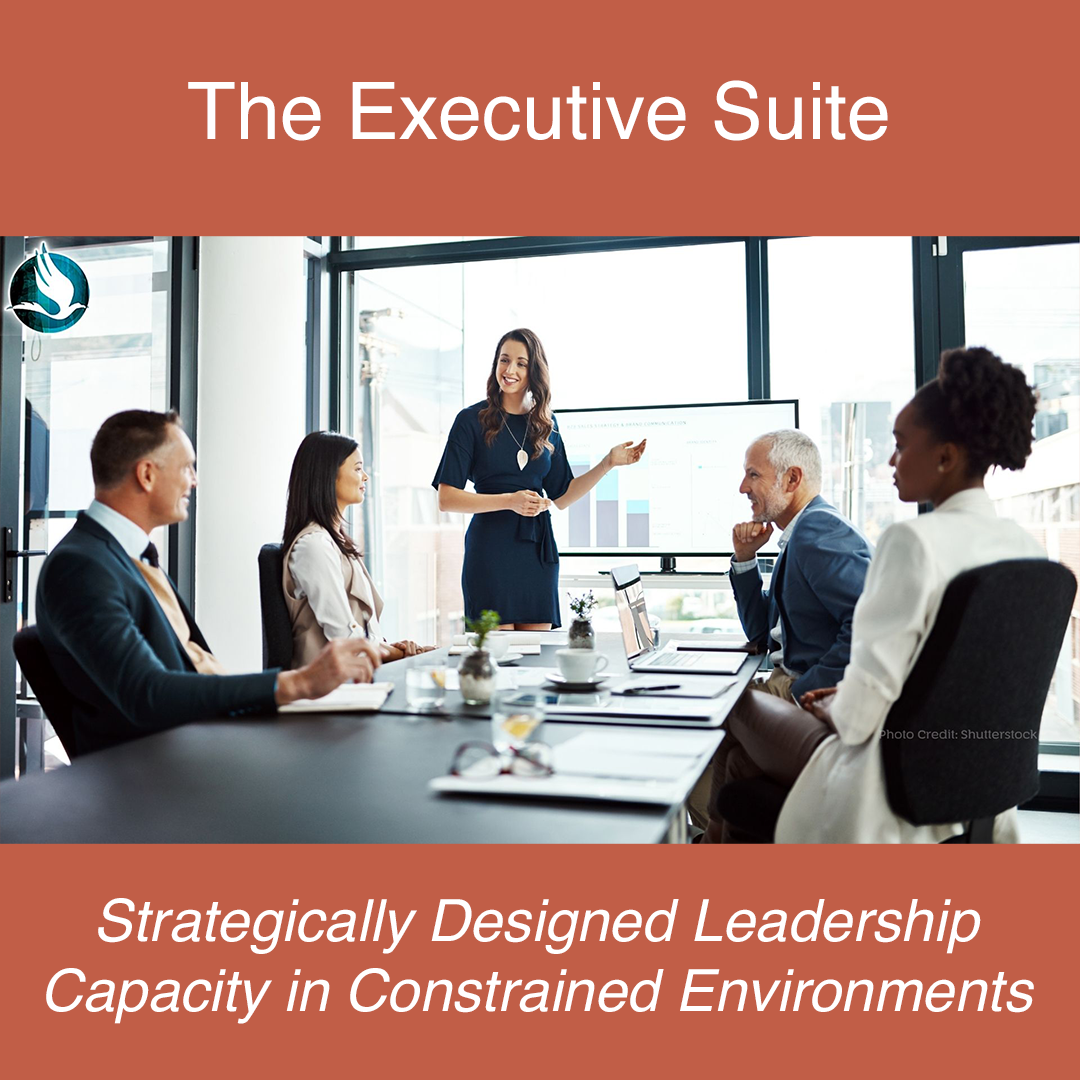
Leadership capacity is often misunderstood as stamina. Work longer. Carry more. Respond faster. Yet the leaders who sustain performance over time are not those who do more, but those who design their work differently.
According to the World Health Organization, burnout is linked to chronic workplace stress that has not been successfully managed, not simply to hard work itself (WHO, 2019). Similarly, Gallup research finds that role clarity and manageable workload are among the strongest predictors of employee engagement and well-being (Gallup, 2023). Capacity, then, is less about volume and more about design.
For many, capacity is often interpreted as a need for additional people. While in some cases that is appropriate, many organizations are operating within financial constraints that limit that option. In those environments, expanding capacity requires a different approach, one grounded in clarity, boundaries, and decision discipline.
The question shifts from “Who else do we need?” to “How can we work differently with the capacity we already have?”
Consider three disciplines that strengthen leadership capacity.
Clarity
Clear priorities reduce friction. When leaders define what matters most, teams expend less energy guessing and more energy executing. Research from McKinsey shows that organizations with aligned priorities are significantly more likely to outperform peers in long-term results (McKinsey & Company, 2021). Essential to effective clarity is addition by subtraction. In fast-paced environments, resetting existing priorities when adding new ones signals that leaders understand the realities their teams are navigating.
Many leaders do not have a capacity problem. They have a prioritization problem that shows up as one.
Author Antoine de Saint-Exupery wrote, “Perfection is achieved, not when there is nothing more to add, but when there is nothing left to take away.”
Boundaries
Sustainable performance requires visible limits. Harvard Business Review research on energy management suggests that leaders who model recovery and boundary-setting create healthier, more productive teams over time (Schwartz & McCarthy, 2007). This is often where leadership intent and behavior diverge. Without visible boundaries, teams learn that everything is urgent and nothing can wait.
Most leaders are committed to doing whatever it takes to get the job done, even at the expense of their own well-being. In a future article, we will explore five types of boundaries every leader should consider. In the meantime, executive teams can normalize reasonable boundary discussions, providing space to discover hidden barriers.
Decision Discipline
Not every issue requires escalation. Leaders who establish decision rights and empower others prevent bottlenecks and preserve cognitive bandwidth. Clear decision frameworks increase speed where it matters and prevent unnecessary rework (Bain & Company, 2019). When systems embrace the imperfections of nuance, leaders can lean in and balance ownership with growth.
Strong decision discipline requires leaders to consistently ask a different set of questions:
- What truly requires my involvement?
- Where is “good enough” sufficient to move forward?
- What would happen if I removed myself from this decision entirely?
In many organizations, leadership capacity is constrained not by the volume of decisions but by the number of decisions that flow upward unnecessarily. When leaders remain involved in decisions others are ready to own, they unintentionally create dependency, slow execution, and increase their own cognitive load.
Reducing over-involvement expands capacity, strengthens ownership, and builds trust.
Strategically designed leadership capacity identifies and removes what no longer serves. When unnecessary friction is reduced, energy, judgment, and focus are applied where they matter most. The result is greater effectiveness and more sustainable leadership over time.
Executive Team Reflection
Clarity: Where might competing priorities be diluting focus, and what could be removed or reset to create sharper alignment?
Boundaries: What visible boundary could you model this month that would protect sustainability without compromising performance?
Decision Discipline: Where are decisions escalating unnecessarily, and how might clearer decision rights expand ownership and preserve leadership capacity? Where are you staying involved out of habit or protection rather than necessity, and what would change if you stepped back?
Capacity is rarely expanded by adding more. It is expanded by removing friction, redistributing ownership, and making fewer but better decisions.
References (APA)
Bain & Company. (2019). How clear decision roles enhance organizational performance.
Gallup. (2023). State of the global workplace report.
McKinsey & Company. (2021). The organization blog: Aligning priorities for performance.
Schwartz, T., & McCarthy, C. (2007). Manage your energy, not your time. Harvard Business Review.
World Health Organization. (2019). Burn-out an occupational phenomenon: International classification of diseases.
Shared from APRIL 2026 Issue of Thunderbird Leadership Consulting ELEVATE – Tbird’s Hub for Practical Leadership Insights.
Enjoy our YouTube video below, then visit Thunderbird Leadership’s YouTube channel to watch all of our YouTube videos!